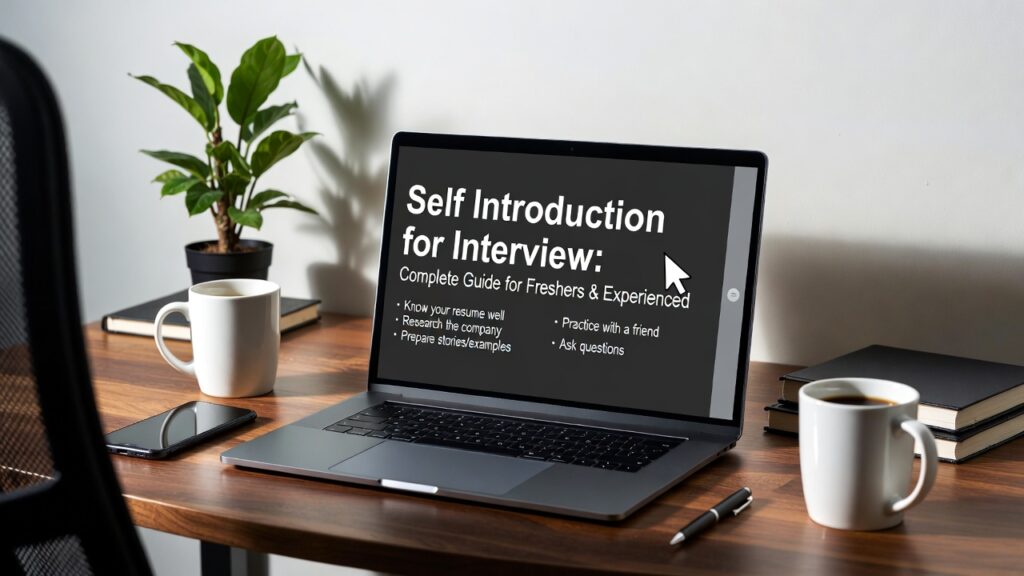

Making a positive first impression in an interview is crucial, and nothing sets the tone better than a self introduction for interview. Whether you are a fresher stepping into the corporate world or an experienced professional seeking your next opportunity, the way you introduce yourself can significantly influence your interviewer’s perception. In this comprehensive guide, we will explore everything you need to know about crafting a powerful self-introduction, tips to stand out, common mistakes to avoid, and practical examples for different roles.
Understanding the Importance of Self Introduction in Interviews
A self introduction for interview is more than just a formality. It is your first chance to showcase your personality, professionalism, and confidence. Interviews often begin with the question, “Tell me about yourself,” which is essentially an invitation for you to summarize your background succinctly. A well-prepared introduction helps you create a strong impression, establishes rapport, and sets the stage for the rest of the interview. For freshers, it is a chance to highlight educational achievements, internships, and skills. For experienced candidates, it demonstrates professional expertise, accomplishments, and career goals.
Key Elements of a Perfect Self Introduction
A compelling self introduction for interview should have several key elements:
- Greeting – Start politely, addressing the interviewer.
- Name & Background – Mention your name, educational qualification, and origin briefly.
- Professional Summary – Highlight your current role or relevant experience.
- Skills & Achievements – Discuss your strengths and notable accomplishments.
- Career Goals & Aspirations – Conclude with your motivation and what you aim to achieve in this role.
Balancing these elements ensures your introduction is concise, engaging, and memorable. Avoid excessive details or personal information unrelated to your professional profile.
Self Introduction for Freshers
Freshers often struggle with self-introduction due to limited professional experience. The key is to focus on your education, internships, certifications, and skills relevant to the job. For example, you can start with your academic background, mention your area of specialization, talk about internships or projects, and finish with your career objectives. Highlight qualities such as adaptability, willingness to learn, and enthusiasm for the role. Remember, confidence is as important as content. Even if you are new to the industry, a confident self-introduction can leave a lasting impression.
Example for a fresher:
“Good morning, my name is Sarah Khan. I recently graduated with a Bachelor’s degree in Computer Science from ABC University, where I focused on web development and data analytics. During my final year, I completed an internship at XYZ Company, where I developed a small-scale inventory management system. I have strong programming skills in Python and Java, and I am eager to apply my knowledge to real-world challenges in your company. I am particularly excited about your upcoming projects in software automation and hope to contribute effectively as a junior developer.”
Self Introduction for Experienced Professionals
For professionals with experience, a self introduction for interview should highlight your work history, skills, key achievements, and career progression. The goal is to convey your expertise and demonstrate how you can add value to the organization. Focus on measurable accomplishments, leadership skills, and industry knowledge. Mention recent roles and responsibilities concisely, avoiding going into excessive details that may be covered later in the interview.
Example for experienced candidates:
“Good afternoon, my name is Ali Raza. I have over five years of experience in digital marketing, specializing in SEO and content strategy. Currently, I am working as a Senior SEO Specialist at ABC Digital Solutions, where I successfully increased organic traffic by 40% for key clients over the past year. My skills include keyword research, content planning, and analytics-driven strategy implementation. I am passionate about driving business growth through innovative marketing solutions and look forward to leveraging my experience to contribute to your team’s success.”
Tips for Crafting an Effective Self Introduction
Creating a strong self introduction for interview requires preparation and practice. Here are some essential tips:
- Keep it concise: Ideally, 60–90 seconds. Avoid rambling.
- Tailor it to the job: Highlight skills and experiences relevant to the role.
- Use positive language: Show enthusiasm and confidence.
- Practice aloud: Helps improve delivery and reduces nervousness.
- Maintain good body language: Stand tall, make eye contact, and smile.
Remember, your introduction should feel natural, not scripted. A genuine, confident introduction resonates more with interviewers than a robotic recitation.
Common Mistakes to Avoid in Self Introduction
Even minor mistakes in your self introduction for interview can negatively impact your impression. Common errors include:
- Overloading with information – Too many details can confuse the interviewer.
- Being too casual or informal – Avoid slang or overly personal information.
- Lack of preparation – Hesitation or filler words like “um” reduce confidence.
- Neglecting relevance – Focus on aspects that matter to the role, not unrelated hobbies.
- Poor body language – Avoid slouching, looking down, or crossing arms.
Being aware of these mistakes allows you to refine your introduction and present yourself professionally.
Structure Your Self Introduction for Maximum Impact
A structured self introduction for interview ensures clarity and flow. Here’s a suggested framework:
- Greeting & Name – “Good morning, I am [Your Name].”
- Educational Background – Briefly mention your degree or certifications.
- Professional Experience / Internship – Highlight relevant work or projects.
- Skills & Strengths – Emphasize skills aligned with the job description.
- Achievements – Share accomplishments with measurable results.
- Career Goals – Express enthusiasm and alignment with the company’s vision.
This flow keeps your introduction organized, professional, and easy for interviewers to follow.
Self Introduction Examples for Different Roles
To make your preparation easier, here are some role-specific examples:
- Software Developer: Focus on programming skills, projects, and problem-solving ability.
- Sales Executive: Highlight communication skills, past achievements in sales targets, and client handling.
- HR Professional: Emphasize people management skills, recruitment experience, and organizational skills.
- Teacher / Educator: Mention qualifications, teaching experience, and innovative teaching methods.
Tailoring your introduction to the specific role demonstrates awareness, preparedness, and enthusiasm.
Using STAR Method in Self Introduction
For candidates with experience, integrating elements of the STAR (Situation, Task, Action, Result) method into your self introduction for interview can enhance impact. Highlight a professional scenario where you successfully handled a challenge. This not only shows your skills but also provides a measurable context for your achievements.
Example:
“In my previous role as a project manager, we faced a 20% delay in project delivery. I implemented agile workflows, conducted weekly check-ins, and optimized resource allocation. As a result, we completed the project on time, earning client praise and a 15% bonus for the team. I am excited to bring this proactive approach to your company.”
Final Thoughts: Mastering Self Introduction for Interviews
A powerful self introduction for interview can set the tone for the entire interview. For freshers, focus on your education, skills, and enthusiasm. For experienced professionals, emphasize achievements, experience, and career goals. Remember to be concise, confident, and engaging. Practice is key—rehearse your introduction until it feels natural. With a polished self-introduction, you can impress interviewers, boost confidence, and significantly increase your chances of success.
FAQs About Self Introduction for Interview
1. How long should a self introduction be in an interview?
Ideally, your introduction should be 60–90 seconds, long enough to cover key points but concise enough to maintain interest.
2. Should I memorize my self introduction word-for-word?
No. Memorizing can make you sound robotic. Understand the key points and practice delivering them naturally.
3. How can freshers make their self introduction impressive?
Focus on education, internships, projects, certifications, and qualities like adaptability and eagerness to learn.
4. Can I include hobbies in my self introduction?
Only if they are relevant to the job or showcase skills such as leadership, teamwork, or creativity.
5. How do I handle nervousness during self introduction?
Practice beforehand, maintain positive body language, take a deep breath, and start confidently with a polite greeting.


